
In 2025, artificial intelligence is no longer a futuristic concept reserved for tech giants — it has become a core growth driver for small businesses across industries. From automating tedious tasks to delivering hyper-personalized customer experiences, AI is giving small enterprises the power to scale, innovate, and compete at levels that were previously unthinkable.
But what does AI adoption look like for small businesses right now? And how exactly is it reshaping their path to success? Below, we explore four major areas where AI is revolutionizing small business growth in 2025.
- Smarter Operations Through Automation
One of the most significant benefits AI brings to small businesses is operational efficiency. Many time-consuming tasks that used to require manual input are now being handled by intelligent systems — freeing up valuable time and resources.
Examples include:
AI-powered scheduling tools that coordinate meetings, employee shifts, or customer bookings.
Automated invoicing and accounting systems like QuickBooks or Xero, which now include AI-driven cash flow forecasting and error detection.
Inventory management tools that predict demand and optimize stock levels, reducing waste and missed sales.
In 2025, even solopreneurs are using AI-powered virtual assistants to manage emails, transcribe calls, and handle customer service inquiries — often indistinguishable from human interaction.
This level of automation allows small businesses to operate leaner, respond faster, and scale without overhiring, giving them the flexibility to grow sustainably
- AI-Driven Marketing and Customer Engagement
Marketing used to require big budgets and entire teams. But now, with AI in the mix, even a small business can run highly targeted, personalized campaigns that rival those of major brands.
AI is transforming marketing in areas like:
Predictive analytics: Tools like HubSpot and Salesforce Einstein analyze customer behavior and forecast buying patterns.
Content creation: Platforms like Jasper or ChatGPT help generate social posts, product descriptions, and email campaigns in seconds.
Chatbots and virtual agents: AI-powered chat tools on websites and social media provide instant support, upsell products, or collect leads 24/7.
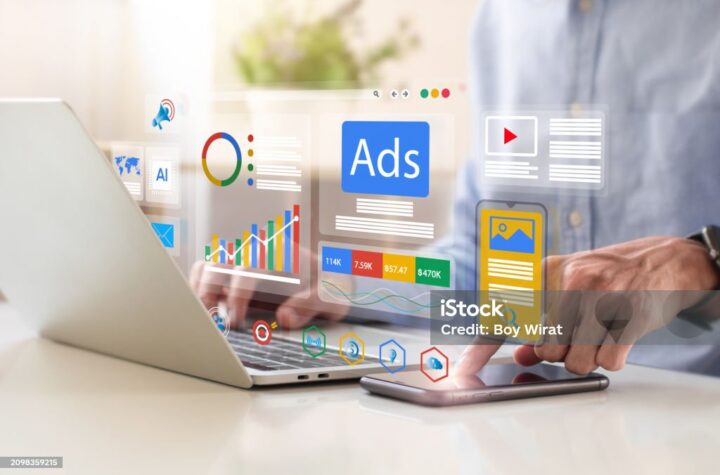
Ad optimization: Platforms like Meta and Google Ads use AI to automatically test and adjust ad creative, audience targeting, and bidding strategies.
In 2025, what sets small businesses apart is their ability to use AI not just for efficiency, but for connection. Personalization is no longer optional — it’s expected. AI tools enable businesses to deliver relevant messaging, tailored offers, and consistent service across platforms — all with minimal human oversight.
This builds stronger customer relationships and leads to higher retention, better engagement, and smarter ad spend.
- AI-Powered Decision Making and Strategy
Access to reliable, real-time insights used to be a luxury for large corporations. Now, thanks to AI, data-driven decision-making is within reach for every business, no matter the size.
Key uses in 2025 include:
Real-time dashboards: Tools like Tableau and Zoho Analytics now integrate with AI to surface key trends, anomalies, and opportunities.
AI forecasting: Small retailers can use machine learning models to predict sales, seasonal demand, and inventory needs with surprising accuracy.
Customer sentiment analysis: Natural Language Processing (NLP) tools can scan reviews, social media, or support tickets to identify pain points or product feedback.
By automating data analysis, AI empowers small business owners to act faster and smarter. Instead of guessing, they can now test ideas, simulate outcomes, and fine-tune strategies based on actual performance data.
This level of agility is a game-changer — especially in fast-moving markets or competitive niches, where the ability to pivot quickly and precisely can make or break growth.
- Democratization of AI: Accessibility Without Complexity
Perhaps the most exciting development in 2025 is that AI is now truly accessible to small businesses. You no longer need a data science team or a tech background to benefit from machine learning. Thanks to user-friendly platforms and plug-and-play tools, the barrier to entry has fallen dramatically.
What makes AI accessible today?
Low-code and no-code platforms: Tools like Zapier, Make, and Microsoft Power Automate let non-tech users build AI workflows, automate processes, and integrate apps with drag-and-drop simplicity.
Affordable AI services: What once cost thousands to build can now be rented or subscribed to. From AI transcription services to image generation and predictive tools, pay-as-you-go models make experimentation risk-free.
Pre-trained models: Business owners can access AI trained on massive datasets (like customer service or sales data) without doing any of the heavy lifting themselves.
Additionally, large tech providers — including Google, Microsoft, and OpenAI — are creating AI tools specifically designed for small business users, with intuitive interfaces, support resources, and built-in compliance features.
The result? A massive leveling of the playing field, where innovation is no longer limited to those with large budgets or in-house tech teams. Every small business owner can now use AI to punch above their weight, experiment with new models, and compete in smarter, faster ways.
Conclusion: AI Is a Growth Partner — Not Just a Tech Trend
In 2025, AI isn’t just a tool — it’s a strategic partner for small business growth. From streamlining daily operations and elevating customer experience to making smarter decisions and unlocking creative potential, AI is fundamentally changing how small businesses thrive.
The beauty of this evolution is that you don’t need to be an expert to benefit. With the rise of easy-to-use tools and affordable platforms, any small business can start applying AI in ways that are impactful, intuitive, and scalable.
Success in the AI era isn’t about adopting every new tool — it’s about using the right ones with clarity and purpose. Start small, test often, and evolve your approach as your business grows. Whether you’re running a local shop, a service-based brand, or an e-commerce site, AI gives you the power to work smarter, connect deeper, and grow faster — without burning out or breaking the bank.





Building a community around your brand is the best marketing strategy. Love that you mentioned that.
Building a community around your brand is the best marketing strategy. Love that you mentioned that.
Content is king, but distribution is queen! Excellent points on promotion strategies.