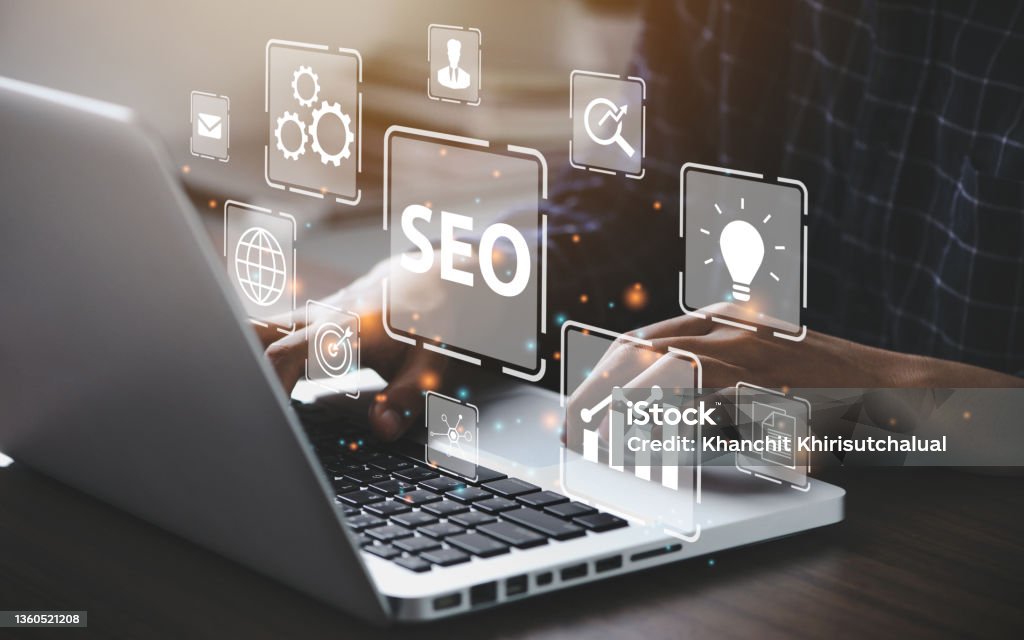
Businessman using a computer for analysis SEO Search Engine Optimization Marketing Ranking Traffic Website Internet Business Technology Concept."n
Introduction
In the digital era, every business wants one thing—visibility. You may have the best product, a beautifully designed website, or a passionate team, but if customers can’t find you online, your efforts won’t deliver results. This is where Search Engine Optimization (SEO) comes in.
SEO is not just about ranking higher on Google—it’s about building trust, attracting the right audience, and turning online searches into real business opportunities. For any business, whether a small startup or an established brand, SEO acts as the engine that drives growth.
In this blog, we’ll explore how SEO works, why it is crucial for business growth, and practical ways to leverage it for long-term success.
What is SEO?
SEO (Search Engine Optimization) is the practice of optimizing your website and content so that it ranks higher on search engines like Google, Bing, or Yahoo.
When people search for a product or service you offer, SEO ensures that your business shows up on the first page—because research shows that 75% of users never scroll past the first page of results.
SEO involves multiple strategies:
- On-page optimization (keywords, titles, meta descriptions, internal links)
- Off-page optimization (backlinks, online reputation)
- Technical SEO (site speed, mobile-friendliness, security)
- Content creation (blogs, videos, guides, FAQs)
Why SEO Matters for Business Growth
1. Increases Visibility and Brand Awareness
Most customers start their journey with a Google search. If your business appears at the top, you automatically gain more visibility and brand recall.
For example, if you run a fitness business and your blog ranks for “best workouts for beginners,” people will start associating your brand with expertise in fitness.
2. Drives High-Quality Traffic
Unlike paid ads, SEO targets users who are already searching for what you offer. This means traffic from SEO is not random—it’s highly relevant and likely to convert.
If someone searches for “luxury skincare products,” and your website appears, that visitor is already interested in buying. SEO brings qualified leads straight to your business.
3. Builds Trust and Credibility
Users trust Google. When your website ranks on the first page, it signals that you are a credible authority in your industry.
- Well-optimized content builds thought leadership.
- Positive reviews and backlinks increase trust.
- A smooth user experience keeps visitors engaged.
Trust is the foundation of sales—and SEO builds it naturally over time.
4. Cost-Effective Marketing Strategy
Traditional ads (TV, radio, print) are expensive and short-lived. Paid online ads can also be costly if run continuously. SEO, on the other hand, is an investment with long-term returns.
Once your site ranks high, you continue to receive free traffic without spending money on ads. The upfront effort may take months, but the payoff is sustainable growth.
5. Improves User Experience
SEO is not just about pleasing search engines—it’s about enhancing the customer journey.
- Fast-loading websites reduce bounce rates.
- Mobile-friendly design ensures accessibility.
- Organized content helps users find answers quickly.
A great user experience keeps visitors coming back, boosting loyalty and conversions.
6. Gives You a Competitive Advantage
If your competitors are using SEO and you are not, you risk being invisible online. On the other hand, if you invest in SEO strategically, you can outrank competitors and capture more market share.
Businesses that appear first in search results naturally get more trust, traffic, and revenue.
How SEO Actually Works in Business
To see real growth, SEO must be applied strategically:
Step 1: Keyword Research
Understanding what your customers search for is the foundation of SEO.
- Example: Instead of targeting “shoes,” a small business might rank better for “affordable running shoes for women.”
- Long-tail keywords bring less competition and higher conversion rates.
Step 2: On-Page SEO
This involves optimizing website content:
- Using target keywords in titles, headings, and descriptions.
- Creating valuable content like blogs, guides, and FAQs.
- Adding internal links to guide users through your website.
A well-optimized page tells Google exactly what your business offers.
Step 3: Content Marketing
Content is the heart of SEO. Blogs, videos, and infographics help answer customer questions and position your business as an expert.
For example, a health brand could publish:
- “10 Healthy Morning Habits”
- “Guide to Mindful Eating”
- “Top Nutrients for Boosting Immunity”
This attracts traffic, builds authority, and nurtures leads.
Step 4: Technical SEO
Google prefers websites that are easy to crawl and user-friendly.
- Fast page speed.
- Mobile responsiveness.
- Secure (HTTPS) connections.
- Clear site structure with proper sitemaps.
Technical SEO ensures both users and search engines can access your site smoothly.
Step 5: Link Building (Off-Page SEO)
Getting other websites to link back to yours is like receiving a vote of confidence.
- Guest posts, press releases, and collaborations can earn quality backlinks.
- The more trusted sites link to you, the higher your ranking.
Step 6: Analytics and Tracking
Tools like Google Analytics and Search Console show:
- Which pages are performing best.
- Where your traffic is coming from.
- What keywords are bringing results.
This helps you refine strategies and focus on what works.
Real Business Examples of SEO Growth
- Local Business – A bakery optimized for “best birthday cakes near me.” Within months, it ranked #1 locally, doubling store visits.
- E-commerce Store – An online fashion brand used SEO blogs like “Top Saree Trends 2025” to attract shoppers and increase sales.
- Health Coach – By publishing wellness blogs, a coach ranked high for “weight loss programs online” and started receiving consistent client leads.
Future of SEO in Business
SEO is evolving with technology. Future trends include:
- Voice Search – Optimizing for “near me” and conversational queries.
- AI-Powered Search – Google’s algorithms are becoming smarter with AI.
- Video SEO – YouTube and TikTok optimization will grow more important.
- Local SEO – “Near me” searches will dominate for small businesses.
Businesses that adapt early to these trends will continue to thrive.
Conclusion
SEO is not a one-time activity—it’s a long-term growth engine for any business. It improves visibility, builds trust, drives relevant traffic, and ultimately boosts sales.
If you want your business to stand out in the crowded online space, SEO is the most powerful and sustainable strategy to invest in.
With the right SEO roadmap, your business won’t just survive—it will grow, scale, and lead in your industry.



Backlinks are still so important, but quality over quantity is the mantra now. Great points.
Local SEO is often overlooked by small businesses. This guide covers all the essentials for ranking in improved locations.