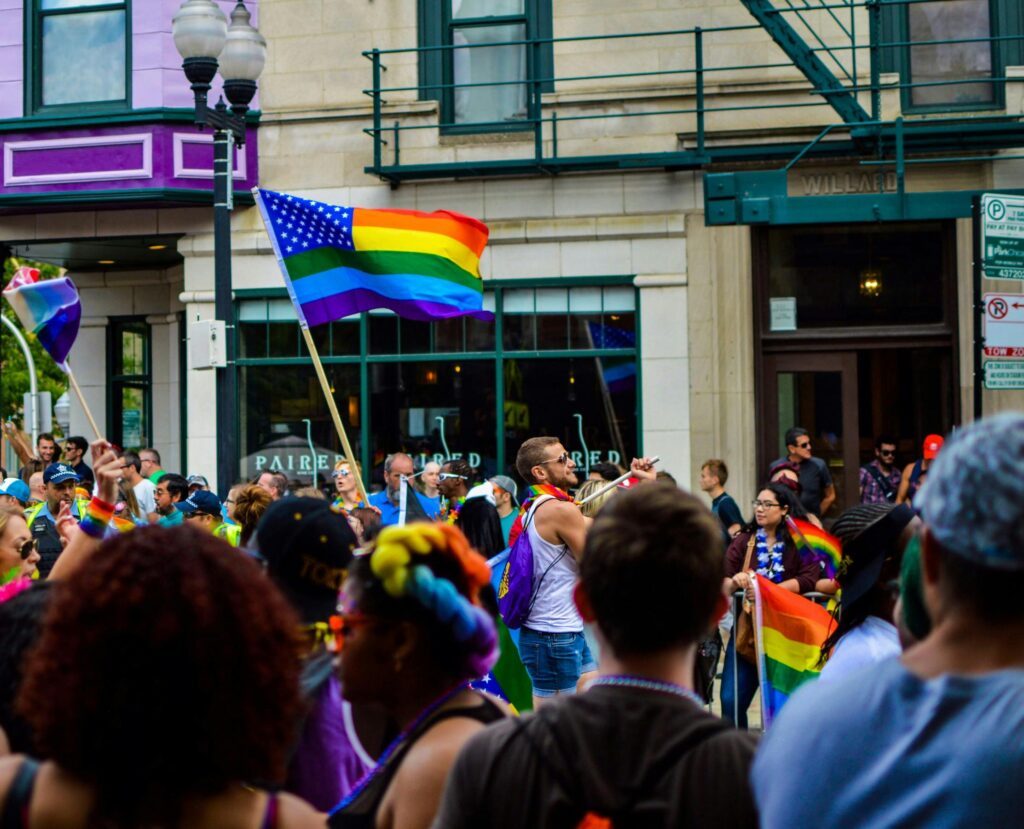
In today’s society, we often grow up hearing what is “normal” and what is not. From childhood, these ideas are fed to us how boys should behave, how girls should speak, who we should love, what kind of life we should want. Anyone who steps outside of these invisible lines is labelled strange, different, or even wrong. But one question keeps coming back to my mind: Can there really be only one kind of normal?
This thought often arises when I think about the people who are classified as “third gender” or transgender in our society. Who are they, really? Why is there so much discomfort around them? And why does society make it so difficult for them to live freely?
Technically, a transgender person is someone whose gender identity does not align with their physical appearance or assigned sex at birth. For example, a child born as a boy might feel like a girl inside. The body and the mind do not match. It’s not a choice it’s a reality. Yet, despite this, there is an intense level of rejection, hate, and discrimination toward them. They are teased in schools, left out in colleges, denied job opportunities, and treated as if they have a disease. People laugh at them, insult them, and even try to “fix” them, as if their identity is a mistake.
On 15th April 2014, the Supreme Court of India gave a historic judgment by officially recognizing the third gender. It was a major step for the rights of transgender people. There was celebration in the community, and rightfully so. On a legal level, it was a victory. But the real question is—have we, as individuals, truly accepted them in everyday life?
I remember one of my school friends who was always a little different. While we were growing up, she realized that she was emotionally attracted to people of the same sex. At the same time, she also began to understand that her gender identity didn’t match the one assigned to her at birth. She tried to blend in, dated boys just to avoid questions, and forced herself to meet society’s expectations. But inside, she was breaking. Eventually, she decided to open up to her parents. Like many others, they called it a phase and asked her to change. They expected her to act “normal.” But what is normal when your whole life feels like a lie?
She was not just dealing with identity confusion—she was dealing with rejection, loneliness, and constant fear. In school, she faced bullying. At home, she was asked to “correct” herself. Outside, people stared at her, gossiped, and laughed. What she needed was love, but what she received was judgment. All this just for wanting to be who she truly was.
Another friend of mine, someone I met on instagram, had a different yet equally painful story. He was born biologically male, but due to hormonal conditions, he developed many female characteristics. Because of this, people never accepted him as a “real boy.” His own relatives made fun of his body. In school, he was bullied mercilessly mocked for the way he walked, the sound of his voice, and even the way he sat. Teachers ignored the teasing, and students made his life hell. At home, things were no better. His parents didn’t know how to deal with his condition, so they chose the easiest path blaming and scolding him for something that was never his fault.
He once told me that all he ever wanted was to be treated with respect, like any other human being. But society was too busy judging him to even see the pain in his eyes. His confidence was broken early in life. And sadly, his story isn’t rare—there are thousands like him, living in silence, battling a world that refuses to understand them.
What links both these stories is the cruelty of a rigid definition of “normal.” Society’s idea of normal is narrow, outdated, and harmful. People are diverse. They come in different bodies, different identities, and different kinds of love. That doesn’t make them less human.
As a student of philosophy, I’ve learned that truth isn’t always black and white. It exists in many forms. The same applies to identity. Just because someone looks or feels different doesn’t mean they are wrong. The distinction between “normal” and “abnormal” is not a law of nature—it is something we have created. And it is something we can change.
We must stop trying to control others. If someone is happy with who they are, if two people of the same sex love each other, if a person wants to express a gender different from what society expects—why should we interfere? Why should we ruin their joy just to satisfy our own outdated belief system?
We often talk about acceptance, but very few of us practice it. Acceptance means more than just saying “we support you”—it means standing up for people, listening to them, understanding their struggles, and making space for them to live openly. It means letting go of our rigid definitions of normal and embracing the beautiful variety of human life.
There is no single way to be human. No fixed rule on how to live, love, or express oneself. Every individual deserves to be seen, heard, and respected. It’s time we stop forcing people into narrow boxes and start creating a world that celebrates difference, not punishes it.
So again, I ask can there be only one normal?
No. Because humanity is not one shade, one voice, or one identity. It is a spectrum. And every part of that spectrum deserves a place.